Showing posts with label TCM. Show all posts

Monday, April 4, 2011

Modern TCM Diagnosis & Facial Acupuncture CE Seminars

Seminar 1: Modern TCM Diagnosis with Acupuncture Points Palpation (with English translation) 

This course will introduce the selection of effective acupoints for Modern TCM Diagnosis with Acupuncture Points Palpation on clinical experiences. Details will be given about the meridians and acupoints related to Modern TCM Diagnosis with Acupuncture Points Palpation. Detailed demonstration of Modern TCM Diagnosis with Acupuncture Points Palpation and clinical application 

Date & Time: 10:00 AM - 6:00 PM, Saturday, April 30, 2011 with 1 hour break
PDA Points: 7

Seminar 2: MicroAcupuncture for Facial Rejuvenation (with English translation) 

This course covers acupoints which are related to MicroAcupuncture application, basic procedures and principles of MicroAcupuncture, and detailed demonstration MicroAcupuncture needle techniques and clinical application 

Date & Time: 10:00 AM - 6:00 PM, Sunday, May 1, 2011 with 1 hour break 

PDA Points: 7 

Location: New York College of Traditional Chinese Medicine, Room 101, 155 First Street, Mineola, NY, 11501

 About the Speaker: 

Prof. Ren, Xiao Yan graduated from Heilongjiang University of Traditional Chinese Medicine in 1988 and is President of Beijing Renxiaoyan Implant Acupuncture Medical Study/Develop Center. She develops health implant acupuncture products by combining modern medical techniques on the basis of traditional medicine theory. 

She has close cooperating relationships with such medical institutions as Beijing Basic Medical Study, Institute of the Academy of Traditional Chinese Medicine, Beijing No. 301 Hospital and Zhejiang Provincial Traditional Chinese Medicine Hospital, laying a solid foundation for developing a new generation of acupuncture technique and related products.

To Register:

Please register for the Continuing Education classes by Prof. Ren at the NYCTCM CEU page. 

Sunday, November 14, 2010

Acupuncture for Parkinson's Disease

A friend of the family had recently brought her aunt to see me for treatment. She told me that she had Parkinson's Disease along with shoulder pain. I accepted to treat her with some hesitancy because I thought this would be a difficult issue. However, as soon as I treated her, everything just seemed to flow smoothly. We were seeing each other for a period of five non-consecutive sessions for two and half weeks.
My friend's aunt whom we will address as "Mrs. Patel," was 77-years old and was visiting her family from London, England. She was diagnosed with Parkinson's Disease in 1991. However, her main complaint was her shoulder pain that resulted from an accident during yoga practice which happened a long time ago.
After seeing how Mrs. Patel was unable to move her arm overhead (and only to the level of her collarbone forming a ninety degree angle), I immediately remember seeing this as frozen shoulder because of my past clinical experience. The pain quality ranged from dull and achy to sharp and stabbing. The pain was made worse with cold air emitted from central air conditioning to ingestion of cold foods. Her surgeon back in England did whatever he or she could to do to fix the problem after the accident. After the surgery, she was unable to move her arm. Furthermore, the surgeon had said that there was a piece of bone from the shoulder that got chipped off and was circulating inside the shoulder joint; thus making the shoulder pain even worse.

In regards to her Parkinson's Disease, it was heartbreaking to see. She had a shuffling gait while walking. She would clutch onto the side-railings with both hands to walk up and down a flight of stairs. Her body frame was frail and thin. Her visage looked very haggard and looked very tired. During the inquiry, she would often speak in a low tone of voice and she felt like sleeping all the time. All the muscles in her body felt very rigid and tense. She was on ten different medications; nine out of ten of them were for Parkinson's Disease and one of them was for bone and joint care.
In addition to that, Mrs. Patel said that the tremors in her hands were exacerbated with emotional and mental stress. One of her medications for Parkinson's was making her constipated; her stools were too dry and were happening once every day. Other signs and symptoms consisted of heavy eyelids and burning sensation in the eyes, vertex headaches, pain upon breathing, and lower back pain. Her pulse was thin, rapid, long and palpable at all three depths. The liver position as well as both kidney positions was very vacuous. While I was examining her pulse, Mrs. Patel and her niece mentioned that she had acupuncture done while she was on a cruise ship. Mrs. Patel said that the other acupuncturist said her liver and kidneys were very weak. It brought a smile to my face to know that there was someone in our field that I can concur with. While examining her tongue, the body was short and thin. The color of the tongue body was light red and the coating of the tongue was thin and white. After examining everything that I found, her diagnosis was "cold painful obstruction" (also known as Han Bi Zheng) and "wasting syndrome" (also known as Wei Zheng). Her pattern was internal wind due to systemic qi and yin vacuity and localized qi and blood stasis.
During the first treatment, getting her to come onto the table was difficult since I didn't have a step stool available at the time so I lifted her onto it. The first set of needles that went in the right shoulder was inserted into the local points and ashi points. Then I inserted needles into Zu San Li (ST-36), San Yin Jiao (SP-6), and Rang Gu (KID-2) for the qi and yin vacuity that was related to her Parkinson's. Next I used direct moxibustion on Qi Hai (CV-6) to help treat her fatigue using three cones. Also I manipulated the needles by hand using the reduction method to release the stagnated proteins her right shoulder and using the supplementation method to address the metabolic vacuities. After thirty minutes of needle retention and manipulation, I took out the needles and used pole moxibustion over her right shoulder. However, I used it in a way that was only taught to me by one my big influencing teachers. I took a paper towel, draped it over the right shoulder (the deltoid), and started tapping the lit end of the moxa pole onto the paper towel. This technique (which is not taught in TCM schools in the US) is much more powerful because the heat from the moxa penetrates deep to the tissues. The last part of the treatment involved tui na (medical massage) onto the shoulder.
This approach I used was the same approach I used in the other treatments that followed with a few modifications such as needle-head moxa over the right shoulder. After her first session was over, Mrs. Patel felt like her vitality had returned back. We continued treatment four more times. After she left my office after our first session with her niece, I noticed that Mrs. Patel was no longer walking like a frail, ill woman. She was walking like a twenty year old. I was worried thinking that the next time I'd see her she would be back to square one. However, when she came for her second session, she was walking the same way as she did after her first session. She did feel some level of trepidation walking up and down a flight of stairs. Despite that, she was still walking smoothly.

After our last session together on August 21st, Mrs. Patel's could now lift her right arm to a one-hundred and twenty degree angle. That showed tremendous amount of improvement than when I saw her for her first session. Unfortunately, with the constraints of time, we couldn't see each other anymore since she had to leave for London the next day. Before Mrs. Patel left, I gave her the name of an acupuncturist and an herbalist in London.
Billy Shonez Singh is a licensed acupuncturist and a board certified Chinese herbalist by the NCCAOM.  He is currently practicing in Commack, NY.  His primary focus with East Asian medicine is stress, pain management, diabetic complications, and treating chemotherapy side-effects
Billy Singh, L. Ac. is a graduate of New York College of Traditional Chinese Medicine's Herbal Certificate Program for Acupuncturists.

Saturday, September 25, 2010

Healthy Chinese Recipes


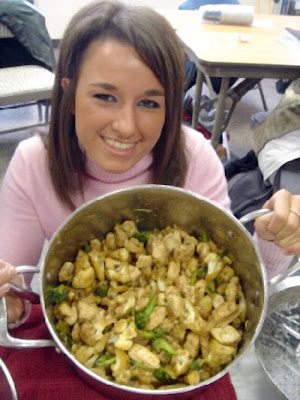
In the New York College of Traditional Chinese Medicine Eastern Nutrition Class a study of nutrition is presented from the perspective of traditional Chinese medicine. The recipes include the healthful function of each dish and each ingredient. Try some of these Healthy Chinese Recipes.

  • Dragon Chicken and Stars
  • Boiled Escarole
  • Fried Rice - Flour Noodle
  • Green Bean Pancake
  • Healthy Salad
  • Jap Chae
  • Korean BBQ
  • Nourishing Carrot Walnut Bread
  • Mung Bean Pancake
  • Stewpendous
  • Winter Mushroom and Chicken Soup
  • Yin Yang Bean RIce

Friday, August 6, 2010

Acupuncture in Huffington Post - Acupuncture & TCM Blog

Anyone considering an alternative treatment for their health problems should read this article "Should you try acupuncture? from the Huffington Post. It explains what acupuncture is, addresses insurance concerns, and says that the new medical model of integrative medicine in patient centered and embraces any and all effective solutions to patient's health problems.

"According to the TCM view, a vital energy called qi flows through the body along channels called meridians. I like to think of these channels as a sprinkling system for the body, bringing qi to vital organs and extremities in much the way hoses bring water to your garden. In the TCM model of health and disease, when qi flow is blocked it stagnates. Stagnating qi causes illness. Acupuncture therapy unblocks the qi flow, strengthens or weakens the qi (think opening and closing the garden spigot) and directs it to areas of need."
Enhanced by Zemanta

Monday, March 23, 2009

Acupuncture for Depression


TCM Directory posted an article on about recent research on Acupuncture for Depression. Many people with depression start conventional treatment but stop it too early because of side effects, expense, lack of insurance coverage, or they recover, then relapse later. People then start looking for alternative medical treatments using Traditional Chinese Medicine.

TCM focuses on 'treating specific symptoms based on each unique patient with the use of a variety of methods such as acupuncture. Studies are now suggesting that acupuncture can be very helpful to those who suffer from depression, offering effective, long-standing results.

A research study funded by the U.S. Office of Alternative Health showed that acupuncture produced similar results when compared to Western bio-medicine. 33 female participants suffering from serious depression, and screened to rule-out psychotic or suicidal symptoms, were split into 3 separate groups, each receiving different forms of treatment. The end results showed that over half of the women who were specifically treated with acupuncture for signs of depression, using the methods and principles of Chinese medicine, experienced complete remission of their symptoms.

The Office of Alternative Health has given high regard to the study, and it is notably found to offer unique treatment for each patient.'

Monday, March 9, 2009

TCM Advisory

Traditional Chinese Medicine-Nature therapy Medicine Health - TCM discovery Net is an authoritative website which is about Traditional Chinese Medicine, Nature therapy, Oriental medicine, Medicine, Health for researching and communicating.

Saturday, May 24, 2008

New York College of Traditional Chinese Medicine Acupuncture School Open Houses


Learn Acupuncture and Oriental Medicine at NYCTCM

Prospective students are invited to attend an NYCTCM Open House for an overview of the Acupuncture school & Traditional Chinese Medicine school programs, a tour of the facility, open discussion, and information on the application process.

Or arrange to visit NYCTCM as a guest student — attend classes, meet with faculty and students, and experience a complimentary acupuncture treatment in the NYCTCM teaching clinic.

Fall Trimester dates: September, 2008 to December, 2008. Now is the time for new and transfer prospective students to prepare for fall enrollment.

Wednesday, May 21, 2008

Where Western Medicine Fails, TCM may offer hope


“I became convinced that drugs used in Western medicine do not outweigh the side effects in many cases,” Dr. Lu says. “Unlike Western medicine, which commonly strives to control symptoms, Chinese medicine focuses on the cause of the illness, and treats the cause.”...

Acupuncture — perhaps the most recognizable form of TCM — involves extremely thin metal needles that are inserted just beneath the skin to stimulate the flow of Qi. It can be effective for migraine headaches, osteoarthritis of the knee, lower back pain, nausea and vomiting associated with pregnancy or chemotherapy, and stress relief. Starting April 1, B.C. residents on a premium assistance program will be able to see a registered acupuncturist under the Medical Service Plan...

TCM therapies are indeed vast, and include food cures (treatment of disease through diet), herbal medicines, massage, and exercises such as Qi Gong and Tai Chi, which strengthen the mind and body.

TCM therapies are also increasingly being used in conjunction with, or as an alternative to, Western medicine to treat infertility. After several months of failing to get pregnant, Vancouver couple Melissa and Jason (their surname was withheld by request) approached their family doctor with their concerns. “I knew it would be trickier for me to have a baby because of my irregular [menstrual] cycles, which were anywhere between two and four months,” Melissa recalls. But after running the usual blood tests to determine that they were both healthy, their doctor wanted them to adopt a “wait-and-see approach for eight months”....

Dr. Brown — a former chartered accountant who, like Lu, pursued TCM as a career after it cured him of a chronic condition — says TCM treatments can enhance fertility naturally. “When a woman is under stress, hormones are diverted away from the reproductive organs in a fight-or-flight response. Acupuncture helps to increase the blood flow to the reproductive organs, which creates a richer [uterine] lining for ovulation and implantation.”... As any generalist can say they treat reproductive health, Brown recommends talking to your family doctor or fertility clinic to find a TCM doctor that specializes in the field of reproductive health. B.C. residents requiring assistance in locating a registered doctor of TCM, a practitioner, an herbalist, or an acupuncturist can also contact the College of Chinese Medicine at 604 783-7100, or visit CTCMA.bc.ca

For complete article:
BCNG Portals Page (R)

Wednesday, January 2, 2008

Classical Chinese Medical Publications

This is a list of some of the most famous Chinese medical publications which form the basis of Acupuncture and TCM theory.

Yellow Emperor's Inner Classic (Huang Di Nei Jing)

Compiled around 100 BC. The oldest classic of traditional Chinese medicine consisting of two books:

"The Simple Questions" (Su Wen) - 81 chapters (Covers the essential theory of internal medicine such as the energetical physiology, pathogenesis and pathology).

"The Spiritual Axis" (Ling Shu) - 81 chapters. (Covers the practical aspects of Chinese medicine and develops the different therapeutical principles of acupuncture and moxibustion).

Yellow Emperor's Inner Classic - Great Simplicity (Huang Di Nei Jing Tai Su) ca 610

Comprehensive notes and commentary on the Huang Di Nei Jing. Also known as the Great Basics.

Yellow Emperor's Inner Classic - Categorisation of the Bright Hall (Huang Di Nei Jing Mintang Leicheng)
(ca 610)

Classic of Difficulties (Nan Jing)
Han Dynasty

An explanation of some of the more difficult to understand passages from the Nei Ching.

Classic of the Pulse (Mai Jing)
Han Dynasty

Written in the late Han dynasty by Wang Shu-he. It is the first book in the Chinese medical literature entirely devoted to pulse diagnosis.

Discussion on Cold-induced Disorders (Shanghan Lun)
Zhang Zhongjing (ca. 150-219 AD)

The first book to advocate the analysis of medical conditions in accordance with the six channels (taiyang, yangming, shaoyang, taiyin, shaoyin, and jueyin) and eight syndromes (yin/yang, outer/inner, hot/cold, and excess/deficient).

Concise Prescriptions from the Golden Casket (Jingui Yaolue Fang Lun)
Zhang Zhongjing - Han Dynasty ca 220

Companion text to the Shanghan Lun.

Systematic Classic of Acupuncture and Moxibustion (Zhenjiu Jaiyi Jing)
Huangfu Mi - Jin Dynasty ca 282.

Discusses medical theory, acupuncture and moxibustion. Also known as the Yellow Emperor's Jiayi Canon on Acupuncture and Moxibustion).