Monday, January 21, 2008


Wednesday, January 2, 2008
Classical Chinese Medical Publications
This is a list of some of the most famous Chinese medical publications which form the basis of Acupuncture and TCM theory.
Yellow Emperor's Inner Classic (Huang Di Nei Jing)
Compiled around 100 BC. The oldest classic of traditional Chinese medicine consisting of two books:
"The Simple Questions" (Su Wen) - 81 chapters (Covers the essential theory of internal medicine such as the energetical physiology, pathogenesis and pathology).
"The Spiritual Axis" (Ling Shu) - 81 chapters. (Covers the practical aspects of Chinese medicine and develops the different therapeutical principles of acupuncture and moxibustion).
Yellow Emperor's Inner Classic - Great Simplicity (Huang Di Nei Jing Tai Su) ca 610
Comprehensive notes and commentary on the Huang Di Nei Jing. Also known as the Great Basics.
Yellow Emperor's Inner Classic - Categorisation of the Bright Hall (Huang Di Nei Jing Mintang Leicheng)
(ca 610)
Classic of Difficulties (Nan Jing)
Han Dynasty
An explanation of some of the more difficult to understand passages from the Nei Ching.
Classic of the Pulse (Mai Jing)
Han Dynasty
Written in the late Han dynasty by Wang Shu-he. It is the first book in the Chinese medical literature entirely devoted to pulse diagnosis.
Discussion on Cold-induced Disorders (Shanghan Lun)
Zhang Zhongjing (ca. 150-219 AD)
The first book to advocate the analysis of medical conditions in accordance with the six channels (taiyang, yangming, shaoyang, taiyin, shaoyin, and jueyin) and eight syndromes (yin/yang, outer/inner, hot/cold, and excess/deficient).
Concise Prescriptions from the Golden Casket (Jingui Yaolue Fang Lun)
Zhang Zhongjing - Han Dynasty ca 220
Companion text to the Shanghan Lun.
Systematic Classic of Acupuncture and Moxibustion (Zhenjiu Jaiyi Jing)
Huangfu Mi - Jin Dynasty ca 282.
Discusses medical theory, acupuncture and moxibustion. Also known as the Yellow Emperor's Jiayi Canon on Acupuncture and Moxibustion).
Tai Chi Classes with Master Sitan Chen
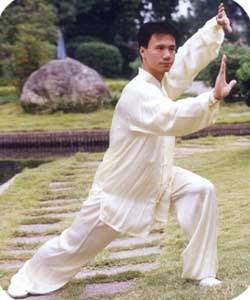
Community Tai Chi Course starting January 8, 2008 in Mineola
New York College of Traditional Chinese Medicine is pleased to announce the opening of a Tai Chi Course to the public. The course will be starting in January, once a week, for 10 sessions in total. We will only charge $20 as an administration fee for this 10-session class.
Tai Chi, or Tiaji, was originally developed in China a few hundred years ago. It is a type of martial art that is primarily known for its health benefits, including means for dealing with tension and stress.
World Tai Chi Champion, Mr. Sitan Chen will be the instructor for this Community Tai Chi Course. You will have a chance to learn Tai Chi from a Master.
For More Information
See the New York College of Traditional Chinese Medicine Community Services page.
Call NYCTCM at 516-739-1545 for more information.
Classes start Tuesday January 8 at 12pm and Wednesday January 9 at 6pm.
This is a great opportunity. Don’t miss it. Limited to 20 participants for each course. The class will take place at New York College of Traditional Chinese Medicine in Mineola.
Monday, December 24, 2007
Sign up for Acupuncture and TCM Newsletter
Sign up for your FREE newsletter topics, acupuncture and tips!
Newsletter Signup
Tuesday, December 18, 2007
Acupuncture in patients with osteoarthritis of the knee: a randomised trial
 Acupuncture is widely used by patients with chronic pain although there is little evidence of its effectiveness. We investigated the efficacy of acupuncture compared with minimal acupuncture and with no acupuncture in patients with osteoarthritis of the knee.
Methods
Patients with chronic osteoarthritis of the knee (Kellgren grade ≤2) were randomly assigned to acupuncture (n=150), minimal acupuncture (superficial needling at non-acupuncture points; n=76), or a waiting list control (n=74). Specialised physicians, in 28 outpatient centres, administered acupuncture and minimal acupuncture in 12 sessions over 8 weeks. Patients completed standard questionnaires at baseline and after 8 weeks, 26 weeks, and 52 weeks. The primary outcome was the Western Ontario and McMaster Universities Osteoarthritis (WOMAC) index at the end of week 8 (adjusted for baseline score). All main analyses were by intention to treat.
Results
294 patients were enrolled from March 6, 2002, to January 17, 2003; eight patients were lost to follow-up after randomisation, but were included in the final analysis. The mean baseline-adjusted WOMAC index at week 8 was 26·9 (SE 1·4) in the acupuncture group, 35·8 (1·9) in the minimal acupuncture group, and 49·6 (2·0) in the waiting list group (treatment difference acupuncture vs minimal acupuncture −8·8, [95% CI −13·5 to −4·2], p=0·0002; acupuncture vs waiting list −22·7 [−27·5 to −17·9], p<0·0001). After 52 weeks the difference between the acupuncture and minimal acupuncture groups was no longer significant (p=0·08).
Interpretation
After 8 weeks of treatment, pain and joint function are improved more with acupuncture than with minimal acupuncture or no acupuncture in patients with osteoarthritis of the knee. However, this benefit decreases over time.
The Lancet, Volume 366, Issue 9480, 9 July 2005-15 July 2005, Pages 136-143
Saturday, December 15, 2007
Clinical Trials - Acupuncture
ClinicalTrials.gov provides patients, family members, and members of the public easy and free access toinformation on clinical studies for a wide range of diseases and conditions.
Subscribe to:
Posts (Atom)


 Posts


