Thursday, September 15, 2011

Empire Blue Cross diagnosis restrictions removed

After numerous efforts and letters on behalf of the Acupuncture Society of New York and other independent efforts effective July 16th, ASNY was informed that the diagnosis restrictions on Empire BC/BS plans have been removed.  Prior restrictions included knee and/or hip osteoarthritis provable with x-ray and nausea from chemotherapy, pregnancy or post surgical.  After extensive contact with the company we have received the response that "our medical policies have been updated and the prior diagnosis restrictions have been removed".  ASNY thanks everyone who helped contribute to the reversal of these restrictions.

Please watch www.asny.org for upcoming ASNY programs on Major Medical, No Fault and Workers Compensation Insurance.   Additionally, I look forward to updating you on meetings that ASNY has this month with the Governor's Office, Department of Insurance and the Workers Compensation Board.

I sincerely thank those who are ASNY members and strongly encourage new members to join in order to help fuel these efforts.

Respectfully,
James M. Shinol, ASNY President

Tuesday, July 12, 2011

NYCTCM 15th Anniversary Celebration

NYCTCM 15th Anniversary CelebrationNYCTCM 15th Anniversary CelebrationNYCTCM 15th Anniversary CelebrationNYCTCM 15th Anniversary CelebrationNYCTCM 15th Anniversary CelebrationNYCTCM 15th Anniversary Celebration

NYCTCM 15th Anniversary, a set on Flickr.

NYCTCM 15th Anniversary at the Sheraton East in Flushing, June 12, 2011

Open House at New York College of Traditional Chinese Medicine


Become an Acupuncturist

Join us to hear about the exceptional programs at New York College of Traditional Chinese Medicine that prepare you for a career in Acupuncture and Oriental Medicine. Prospective students are invited to attend an NYCTCM Open House for an overview of the Acupuncture school & Traditional Chinese Medicine school programs, a tour of the facility, open discussion, and information on the application process.

We are accepting applications for Fall Trimester 2011 which begins September 2011


Early Acceptance Tuition Incentive: Enroll by August 5 and become eligible for a 10% credit on your first trimester's tuition.


Please call (516) 739-1545 to reserve your spot or email admissions@nyctcm.edu


Accreditation
NYCTCM was granted full accreditation by the Accreditation Commission for Acupuncture and Oriental Medicine (ACAOM) in May of 2002.

This means that our students can qualify for financial aid, can sit without restriction for the NCCAOM examinations, and can qualify for licensure in almost every state in the U.S.

In addition, in April of 2003 the New York State Education Department granted to NYCTCM the authority to confer Masters' degrees.

Tuesday, June 14, 2011

Tuesday, May 24, 2011

List of Accredited Acupuncture Schools in U.S.

The Accreditation Commission for Acupuncture and Oriental Medicine (ACAOM) is the national accrediting agency recognized by the U.S. Department of Education to accredit Master's-level programs in the acupuncture and Oriental medicine profession. As an independent body, ACAOM accredits first professional Master's degree and professional Master's level certificate and diploma programs in acupuncture and first professional Master's degree and professional Master's level certificate and diploma programs in Oriental medicine with a concentration in both acupuncture and herbal therapies. Currently, ACAOM has over 50 schools and colleges with accredited or candidacy status with the Commission.

List of Accredited Acupuncture Schools in U.S. is available at the ACAOM website.

Budget Beauty: Manicured Without Getting Clipped - Frugal Traveler Blog - NYTimes.com

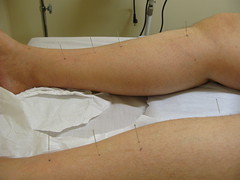
Acupuncture TreatmentImage by NYCTCM via FlickrBudget Beauty: Manicured Without Getting Clipped - Frugal Traveler Blog - NYTimes.com
Matt Gross, NY Times Blogger for "Frugal Traveler" writes about his visit to NYCTCM Acupuncture Clinic in Manhattan.
"As the needle went into my skin, somewhere between the two biggest toes on my left foot, I felt an almost electrical jolt—my metatarsal bones pulsed with energy, like a muscle cramp but completely painless. It was as if my entire foot were a neon sign that had never been switched on before.
“Wow,” I think I said, and the four people in white lab coats observing me hurried to ask if I was okay. Was it a burning pain? No. Was it subsiding? Um, maybe a little. Okay, then everything was fine.
Then they stuck more needles in me.
For aficionados of acupuncture, this is old hat. According to the tenets of Chinese medicine, tapping skinny needles into your pressure points is an age-old way of rebalancing the body and restoring, or ensuring, general health.
The first stop, at 10:30 a.m., was the New York College of Traditional Chinese Medicine (13 East 37th Street; 212-685-0888, nyctcm.edu), an accredited school with three- and four-year degree programs in acupuncture and Chinese herbology. It is located on the fourth floor of one of those anonymous office buildings in the East 30s, just north of Murray Hill. Inside, the school felt like a regular doctor’s office, with forms to fill out detailing medical history and current problems, and lots of people in white lab coats...
After answering some intimate questions about my gastrointestinal workings, I was escorted into the treatment room, where I undressed, put on a paper hospital gown and lay down on a table. The needles went in, most of them painlessly, but every once in a while — like when they went into my foot or lower back — the feeling was incredible. I don’t know how much store I put in Chinese medicine, but those pressure points are definitely connected to deep systems in the human body."
Visit New York College of Traditional Chinese Medicine Acupuncture Clinic
New York College of Traditional Chinese Medicine (NYCTCM)'s Teaching Clinic offers affordably priced Acupuncture and Chinese Healing Arts to the community while providing our advanced students with a clinical internship.
Our interns are senior-level students who have passed a series of qualifying exams that allow them to diagnose and prescribe therapies for the patients who come to our clinic. Licensed Acupuncturists and Traditional Chinese Medicine practitioners supervise our interns. Many of our supervisors have M.D. degrees from China, and all have considerable clinical and teaching experience.
Traditional Chinese Medicine or TCM encompasses both acupuncture and Chinese Herbal Medicine. While acupuncture is perhaps the most widely recognized area of TCM, Chinese Herbal Medicine is also very important in your treatment. Chinese Herbal Medicine administers natural herbal formulas specifically designed to correct imbalances in the body, aiding in the treatment of disease. Our clinic provides Acupuncture Therapy, Herbal Prescriptions, Nutrition Counseling and Massage Therapy.

Friday, May 20, 2011

Acupuncture treatment at NYCTCM

Student interns at NYCTCM Clinic give acupuncture treatments to patients in the community, who are helped by receiving a low cost acupuncture treatment, and the students learn.

Monday, April 4, 2011

Modern TCM Diagnosis & Facial Acupuncture CE Seminars

Seminar 1: Modern TCM Diagnosis with Acupuncture Points Palpation (with English translation) 

This course will introduce the selection of effective acupoints for Modern TCM Diagnosis with Acupuncture Points Palpation on clinical experiences. Details will be given about the meridians and acupoints related to Modern TCM Diagnosis with Acupuncture Points Palpation. Detailed demonstration of Modern TCM Diagnosis with Acupuncture Points Palpation and clinical application 

Date & Time: 10:00 AM - 6:00 PM, Saturday, April 30, 2011 with 1 hour break
PDA Points: 7

Seminar 2: MicroAcupuncture for Facial Rejuvenation (with English translation) 

This course covers acupoints which are related to MicroAcupuncture application, basic procedures and principles of MicroAcupuncture, and detailed demonstration MicroAcupuncture needle techniques and clinical application 

Date & Time: 10:00 AM - 6:00 PM, Sunday, May 1, 2011 with 1 hour break 

PDA Points: 7 

Location: New York College of Traditional Chinese Medicine, Room 101, 155 First Street, Mineola, NY, 11501

 About the Speaker: 

Prof. Ren, Xiao Yan graduated from Heilongjiang University of Traditional Chinese Medicine in 1988 and is President of Beijing Renxiaoyan Implant Acupuncture Medical Study/Develop Center. She develops health implant acupuncture products by combining modern medical techniques on the basis of traditional medicine theory. 

She has close cooperating relationships with such medical institutions as Beijing Basic Medical Study, Institute of the Academy of Traditional Chinese Medicine, Beijing No. 301 Hospital and Zhejiang Provincial Traditional Chinese Medicine Hospital, laying a solid foundation for developing a new generation of acupuncture technique and related products.

To Register:

Please register for the Continuing Education classes by Prof. Ren at the NYCTCM CEU page. 

Wednesday, February 2, 2011

Veterinarians study Acupuncture for animals


Dr. Zinderman is a licensed veterinarian who wanted an alternative solution to animals' health problems. He attended the Chi Institute for Chinese Veterinary Medicine and shows, in this video, acupuncture given to a Dachshund dog with back pain, a common problem in Dachshunds.

Chi Institute of Chinese Medicine, Inc. was founded in Reddick, Florida in 1998. It is now the leading veterinary continuing education (C.E.) provider of Traditional Chinese Veterinary Medicine (TCVM). The mission of the Chi Institute is to train licensed veterinarians to become cutting edge animal health care providers, capable of practicing veterinary acupuncture, Chinese herbal medicine and other TCVM skills.

The Chi Institute believes that the best veterinary health care is the integration of TCVM and conventional veterinary medical care, as unique advantages exist in both systems. Thus, the Chi Institute provides a high quality curriculum that will enable veterinarians to effectively apply the TCVM approach as an integral part of their practice.
Over 2,000 licensed veterinarians have graduated from the Chi Institute. They are now active and competent TCVM practitioners in the USA, Canada, South America, Europe and Japan.

Open House - NYCTCM Acupuncture School in New York

Join us to hear about the exceptional programs at New York College of Traditional Chinese Medicine that prepare you for a career in Acupuncture and Oriental Medicine. Prospective students are invited to attend an NYCTCM Open House for an overview of the Acupuncture school and Traditional Chinese Medicine school programs, a tour of the facility, open discussion, and information on the application process.

Mineola Open Houses
Location: NYCTCM, 155 First St., Mineola, NY 11501

Saturday, Feb. 12, 2011, 10:15 am - 12:15 pm
Saturday, March. 12, 2011, 10:15 am - 12:15 pm
Thursday, April 7, 2011, 6:30 pm - 8:00 pm


Manhattan Open Houses
Location: 13 E 37th St., 4th floor, New York, NY

Thursday, Feb. 17, 6:30 pm - 8:00 pm
Thursday, March 17, 6:30 pm - 8:00 pm
Enhanced by Zemanta

Monday, December 13, 2010

What is the difference between Medical Acupuncture and Chinese Acupuncture


And what’s the difference between Medical Acupuncture
and Traditional or Chinese Acupuncture?

As more and more people are looking into receiving acupuncture for their health complaints, it has become that much more important to know what type of acupuncturists are in practice and what type of qualifications they have.

Acupuncture is a component of a complete medical system called Traditional Chinese Medicine (TCM). Acupuncture originated in China several thousand years ago.

ACUPUNCTURE TRAINING

Acupuncture is performed by licensed acupuncturists with a minimum of 3-4 years of study. This is a rigorous program of acupuncture and traditional Chinese medicine that includes intense study and an internship. Credentials can be seen after their name with an L.Ac.

Most often when you see the initials L.Ac., you can be confident that the acupuncturist had some serious training of at least a few years.

Medical Acupuncture is performed by a doctor (MD) or other licensed health care professional such as a chiropractor, dentist, and physical therapist.

Medical acupuncture was created for these health practitioners (MD, DC, etc.) without the lengthy study that licensed acupuncturists (L.Ac.) take. In fact, some of these courses only require 100 hours of acupuncture study!

Often, when you see the initials MD or DC or any initial without an L.Ac., more often than not, they have had much less acupuncture training.

In fact, it is in the nature of Medical Acupuncture to offer a less comprehensive course of acupuncture study to their trainees. Some states offer a minimum of ONLY 100 hours of acupuncture study while licensed acupuncturists (L.Ac.) have over 3,000 hours.

If you have received acupuncture by an MD, DC, or someone not fully trained like an L.Ac. and have not benefited from the treatment, you should consider going to a licensed acupuncturist (L.Ac.) to experience the full potential that acupuncture has to offer.http://www.medicalacupuncturefacts.com/

Monday, November 15, 2010

Antioxidant activity of 45 Chinese herbs

Pictures of herb samples from categories of Ch...


Image via Wikipedia


Antioxidant activity of 45 Chinese herbs and the relationship with their TCM characteristics
Here, 45 Chinese herbs that regulate blood circulation were analyzed for antioxidant activity using the oxygen radical absorbance capacity (ORAC) assay. A recent publication by Ou et al. identified a close relationship between in vitro antioxidant activity and classification of Chinese herbs as yin or yang.

The 45 Chinese herbs in this study could be assigned the traditional characteristics of natures (cold, cool, hot and warm), flavors (pungent, sweet, sour, bitter and salty) and functions (arresting bleeding, promoting blood flow to relieve stasis, nourishing blood and clearing away heat from blood). These characteristics are generalized according to the theory of yin and yang. We identified a broad range, 40–1990 µmol Trolox Equivalent/g herbs, of antioxidant activity in water extracts. There was no significant correlation between ORAC values and natures or functions of the herbs. There was a significant relationship between flavors and ORAC values. Bitter and/or sour herbs had the highest ORAC values, pungent and/or sweet herbs the lowest. Other flavors had intermediate values.

Flavors also correspond with the yin/yang relationship and our results are supportive of the earlier publication.

We reported for the first time antioxidant properties of many Chinese herbs. High antioxidant herbs were identified as Spatholobus suberectus vine (1990 µmol TE/g), Sanguisorba officinalis root (1940 µmol TE/g), Agrimonia pilosa herb (1440 µmol TE/g), Artemisia anomala herb (1400 µmol TE/g), Salvia miltiorrhiza root (1320 µmol TE/g) and Nelembo nucifera leaf (1300 µmol TE/g). Antioxidant capacity appears to correlate with the flavors of herbs identified within the formal TCM classification system and may be a useful guide in describing their utility and biochemical mechanism of action.

Keywords: flavor – function – herbs – nature – oxygen radical absorbance capacity (orac) – traditional Chinese medicine
Hui Liao, Linda K. Banbury and David N. Leach
Centre for Phytochemistry and Pharmacology, Southern Cross University, Lismore, NSW 2480, Australia and 2Shanxi Provincial People's Hospital, Taiyuan, Shanxi 030012, China
http://ecam.oxfordjournals.org/cgi/content/full/nem054v1#B2
Enhanced by Zemanta

Sunday, November 14, 2010

Acupuncture for Parkinson's Disease

A friend of the family had recently brought her aunt to see me for treatment. She told me that she had Parkinson's Disease along with shoulder pain. I accepted to treat her with some hesitancy because I thought this would be a difficult issue. However, as soon as I treated her, everything just seemed to flow smoothly. We were seeing each other for a period of five non-consecutive sessions for two and half weeks.
My friend's aunt whom we will address as "Mrs. Patel," was 77-years old and was visiting her family from London, England. She was diagnosed with Parkinson's Disease in 1991. However, her main complaint was her shoulder pain that resulted from an accident during yoga practice which happened a long time ago.
After seeing how Mrs. Patel was unable to move her arm overhead (and only to the level of her collarbone forming a ninety degree angle), I immediately remember seeing this as frozen shoulder because of my past clinical experience. The pain quality ranged from dull and achy to sharp and stabbing. The pain was made worse with cold air emitted from central air conditioning to ingestion of cold foods. Her surgeon back in England did whatever he or she could to do to fix the problem after the accident. After the surgery, she was unable to move her arm. Furthermore, the surgeon had said that there was a piece of bone from the shoulder that got chipped off and was circulating inside the shoulder joint; thus making the shoulder pain even worse.

In regards to her Parkinson's Disease, it was heartbreaking to see. She had a shuffling gait while walking. She would clutch onto the side-railings with both hands to walk up and down a flight of stairs. Her body frame was frail and thin. Her visage looked very haggard and looked very tired. During the inquiry, she would often speak in a low tone of voice and she felt like sleeping all the time. All the muscles in her body felt very rigid and tense. She was on ten different medications; nine out of ten of them were for Parkinson's Disease and one of them was for bone and joint care.
In addition to that, Mrs. Patel said that the tremors in her hands were exacerbated with emotional and mental stress. One of her medications for Parkinson's was making her constipated; her stools were too dry and were happening once every day. Other signs and symptoms consisted of heavy eyelids and burning sensation in the eyes, vertex headaches, pain upon breathing, and lower back pain. Her pulse was thin, rapid, long and palpable at all three depths. The liver position as well as both kidney positions was very vacuous. While I was examining her pulse, Mrs. Patel and her niece mentioned that she had acupuncture done while she was on a cruise ship. Mrs. Patel said that the other acupuncturist said her liver and kidneys were very weak. It brought a smile to my face to know that there was someone in our field that I can concur with. While examining her tongue, the body was short and thin. The color of the tongue body was light red and the coating of the tongue was thin and white. After examining everything that I found, her diagnosis was "cold painful obstruction" (also known as Han Bi Zheng) and "wasting syndrome" (also known as Wei Zheng). Her pattern was internal wind due to systemic qi and yin vacuity and localized qi and blood stasis.
During the first treatment, getting her to come onto the table was difficult since I didn't have a step stool available at the time so I lifted her onto it. The first set of needles that went in the right shoulder was inserted into the local points and ashi points. Then I inserted needles into Zu San Li (ST-36), San Yin Jiao (SP-6), and Rang Gu (KID-2) for the qi and yin vacuity that was related to her Parkinson's. Next I used direct moxibustion on Qi Hai (CV-6) to help treat her fatigue using three cones. Also I manipulated the needles by hand using the reduction method to release the stagnated proteins her right shoulder and using the supplementation method to address the metabolic vacuities. After thirty minutes of needle retention and manipulation, I took out the needles and used pole moxibustion over her right shoulder. However, I used it in a way that was only taught to me by one my big influencing teachers. I took a paper towel, draped it over the right shoulder (the deltoid), and started tapping the lit end of the moxa pole onto the paper towel. This technique (which is not taught in TCM schools in the US) is much more powerful because the heat from the moxa penetrates deep to the tissues. The last part of the treatment involved tui na (medical massage) onto the shoulder.
This approach I used was the same approach I used in the other treatments that followed with a few modifications such as needle-head moxa over the right shoulder. After her first session was over, Mrs. Patel felt like her vitality had returned back. We continued treatment four more times. After she left my office after our first session with her niece, I noticed that Mrs. Patel was no longer walking like a frail, ill woman. She was walking like a twenty year old. I was worried thinking that the next time I'd see her she would be back to square one. However, when she came for her second session, she was walking the same way as she did after her first session. She did feel some level of trepidation walking up and down a flight of stairs. Despite that, she was still walking smoothly.

After our last session together on August 21st, Mrs. Patel's could now lift her right arm to a one-hundred and twenty degree angle. That showed tremendous amount of improvement than when I saw her for her first session. Unfortunately, with the constraints of time, we couldn't see each other anymore since she had to leave for London the next day. Before Mrs. Patel left, I gave her the name of an acupuncturist and an herbalist in London.
Billy Shonez Singh is a licensed acupuncturist and a board certified Chinese herbalist by the NCCAOM.  He is currently practicing in Commack, NY.  His primary focus with East Asian medicine is stress, pain management, diabetic complications, and treating chemotherapy side-effects
Billy Singh, L. Ac. is a graduate of New York College of Traditional Chinese Medicine's Herbal Certificate Program for Acupuncturists.

Saturday, November 13, 2010

Clinical Research on Treating Senile Dementia by Combining Acupuncture with Acupoint-Injection

Yemeng Chen, L. Ac., FICAE, President, New York College of Traditional Chinese Medicine

Formerly Yemeng Chen, M.D.,Acupuncture Department,
Huashan Hospital Shanghai Medical University, Shanghai 20040, P. R. China
Abstract: Combining acupuncture with acupoint-injection of aceglutamidi has been used in treating 38 cases of senile dementia. The experiment showed that the therapy is effective for the cases of multi-infarct dementia, the rate of success being 42.82% and of improvement 42.86%. The rating was based on the revised Hasegawa Dementia Scale and the Functional Activity Questionnaire. In addition, it has been observed that the component of high density lipid-cholesterol increased (HDL-C) significantly after treatment.
Key Words: Acupuncture, acupoint-injection, aceglutamidi, senile dementia, multi-infarct dementia, high density lipid-cholesterol (HDL-C)
Senile dementia, its main types being Alzheimer ’s disease (senile dementia of Alzheimer’s type, SDAT) and multi-infarct dementia (MID), is a special disease found only in the aged. IT is characterized by impaired memory and intellectual decline. Being unable to take care of themselves, patients suffering from severe dementia are a heavy burden to the family and community. With the increased proportion of aged people among the populace, the morbidity of senile dementia has also increased. Therefore the disease has been listed as one of the most important items in the research of geriatrics. Beginning from 1988, we tried to combine acupuncture with acupoint-injection of aceglutamidi to treat 38 cases of senile dementia. Having analyzed the clinical data, we found the multi-infarct dementia is an effective indication of acupuncture. The observation is as the follows.
[read more - .pdf ]
Enhanced by Zemanta

Acupuncture License Requirements - New York

General Requirements

The practice of acupuncture or the use of the title "licensed acupuncturist" within New York State requires licensure as an acupuncturist, unless otherwise exempt under the law. Licensed physicians and dentists may be certified to practice acupuncture in New York State, but the requirements and application process are different from those for licensure in acupuncture. Physicians and dentists who seek certification to practice acupuncture should contact the Office of the Professions at 474-3817 ext. 560 for additional information.

To be licensed as an acupuncturist in New York State you must:

* be of good moral character;
* be at least 21 years of age;
* meet education and examination requirements; and
* demonstrate proficiency in English if you are a candidate whose application is based upon credit granted for the completion of courses of study in a country where English is not the principal language spoken.

General Requirements

The practice of acupuncture or the use of the title "licensed acupuncturist" within New York State requires licensure as an acupuncturist, unless otherwise exempt under the law. Licensed physicians and dentists may be certified to practice acupuncture in New York State, but the requirements and application process are different from those for licensure in acupuncture. Physicians and dentists who seek certification to practice acupuncture should contact the Office of the Professions at 474-3817 ext. 560 for additional information.

To be licensed as an acupuncturist in New York State you must:

* be of good moral character;
* be at least 21 years of age;
* meet education and examination requirements; and
* demonstrate proficiency in English if you are a candidate whose application is based upon credit granted for the completion of courses of study in a country where English is not the principal language spoken.

Examination Requirements

You must successfully complete the National Certification Commission for Acupuncture and Oriental Medicine's (NCCAOM) Acupuncture, Foundations of Oriental Medicine and Point Location Modules examinations and the Clean Needle Technique course. If you successfully completed NCCAOM's Acupuncture Written examination, Point Location examination, and Clean Needle Technique course prior to June 2004, you meet the examination requirement for licensure.

For information regarding the examinations and course, including costs, dates of administration, and content, contact:

National Certification Commission for Acupuncture and Oriental Medicine
11 Canal Center Plaza, Suite 300
Alexandria, Virginia 22314
Phone 703-548-9004
Fax 703-548-9079
E-mail info@nccaom.org
Web www.nccaom.org

English Proficiency Requirement

If your licensure application is based upon credit for the completion of courses of study in a country where English is not the principal language spoken, you must demonstrate English proficiency. If you took the NCCAOM licensing examinations in English and passed them, you have met the requirement. Otherwise, you must pass an examination in English proficiency acceptable to the Department (such as TOEFL). Additionally, you can present proof of credit-bearing postsecondary study offered in English at a university or college if the study was in an area such as humanities or English. Courses in mathematics, computer science, and English as a Second Language cannot be used to satisfy this requirement. An acceptable course must be worth at least 3 semester hours or the equivalent. It is your responsibility to see that verification of English proficiency is submitted directly to the Department from the testing agency or college or university.

View Full article at Office of Profressions, New York State Education Dept., Acupuncture

Admission requirements to NYCTCM Acupuncture School

Saturday, September 25, 2010

Moxibustion for Shoulder Pain


In this video, I am also showing how I treat shoulder issues with another modality known as moxibustion. I am putting Ai Ye (mugwort herb) on top of the needles. Once this herb is ignited, the heat emitted is transferred through the needles and into the joint. From there, the heat has a dispersive effect through the joint to allow for pain reduction and proper blood circulation through the joint.

Visit my website.

www.billysingh.com

Healthy Chinese Recipes


In the New York College of Traditional Chinese Medicine Eastern Nutrition Class a study of nutrition is presented from the perspective of traditional Chinese medicine. The recipes include the healthful function of each dish and each ingredient. Try some of these Healthy Chinese Recipes.

  • Dragon Chicken and Stars
  • Boiled Escarole
  • Fried Rice - Flour Noodle
  • Green Bean Pancake
  • Healthy Salad
  • Jap Chae
  • Korean BBQ
  • Nourishing Carrot Walnut Bread
  • Mung Bean Pancake
  • Stewpendous
  • Winter Mushroom and Chicken Soup
  • Yin Yang Bean RIce

Friday, August 6, 2010

Acupuncture in Huffington Post - Acupuncture & TCM Blog

Anyone considering an alternative treatment for their health problems should read this article "Should you try acupuncture? from the Huffington Post. It explains what acupuncture is, addresses insurance concerns, and says that the new medical model of integrative medicine in patient centered and embraces any and all effective solutions to patient's health problems.

"According to the TCM view, a vital energy called qi flows through the body along channels called meridians. I like to think of these channels as a sprinkling system for the body, bringing qi to vital organs and extremities in much the way hoses bring water to your garden. In the TCM model of health and disease, when qi flow is blocked it stagnates. Stagnating qi causes illness. Acupuncture therapy unblocks the qi flow, strengthens or weakens the qi (think opening and closing the garden spigot) and directs it to areas of need."
Enhanced by Zemanta

reBlog from nyctcm.edu: Dr. Tan's Eight Magic Points for Digestive Disorders

Old Chinese medical chart on acupuncture meridiansImage via Wikipedia
Eliminating Waste in Practice: Dr. Tan's Eight Magic Points for All Digestive Disorders

By Lisajeanne Potyk, LAc

Acupuncture Today
December, 2005, Vol. 06, Issue 12


Most of the patients I see in my clinic suffer from a variety of digestive disorders. They do not effectively process their food. They have diarrhea, heartburn, and acid reflux disease. They're nauseated.And who would expect any different? In this fast-paced, high-technology culture, we're overrun with time constraints and stressors of all kinds.People unaware of what a good diet consists of rely on processed fast foods and meats packed with hormones and antibiotics. In the West, we're overprescribed antibiotics and other medications; women are reeling from the side-effects of birth control pills; and we regularly take any of a myriad of anti-inflammatories for the slightest ache. It's no wonder so many people are experiencing internal disharmony. And if all of that wasn't enough, most people either don't know how to, or are afraid to, release their emotions. Opting for a sense of control, they "hold." And they get constipated.

The digestive system is a mirror to how we process our external world on every level. Are we assimilating good nutritional, emotional and spiritual nourishment, and effectively eliminating what is toxic to us? Are we letting go of negative situations and allowing ourselves to be nurtured by positive ones? Without the foundation of a healthy, properly nourished body, we can't find the strength to feed into our emotions. If there's a backlog of undigested emotions, any digestive symptom can manifest. Once balance in the body is established by poor nutrition and digestive functions, we gain the platform to integrate our internal and external worlds.Traditional Chinese medicine teaches us to properly diagnose and treat our patients using staid, ancient teachings recorded thousands of years ago. People don't change from century to century, but their circumstances do.

The environment, food, medications, and stressors affecting our patients are very different today, and since the disharmonies that cause them are rampant, digestive disorders are also rampant. Diagnosis and treatment according to the TCM model, written in (and for) a different time, can therefore be complicated and confusing.Now, imagine a group of acupuncture points that could be used to balance every kind of digestive disorder, including irritable bowel syndrome, bloating, ulcerative colitis, indigestion, and more. Imagine that the points are simple, easy to follow, and quite effective. There is no need to take the pulse, no need to consult a textbook, and no need to fumble through myriad causes. Wouldn't that be magic? It is, thanks to Dr. Teh Fu "Richard" Tan.

Dr. Tan has dedicated his life to experimenting with combinations of points, which are used with excellent clinical results, often instantaneously. Isn't that what we, as practitioners, want - to insert our needles, see an immediate change, and know our treatment is working? With the eight magic points, Dr. Tan offers the ability to elicit consistent, positive results.One could consult any number of the core books written on TCM theory, but isn't the practice of acupuncture - of healing - about how much better the patient feels after being treated? Better to learn the laws of acupuncture, become skilled at them through knowledge and discipline, and then break out into your own successful expression of them.

Dr. Tan's Eight Magic Points

nyctcm.edu, Dr. Tan's Eight Magic Points for Digestive Disorders, May 2010


You should read the whole article.


Enhanced by Zemanta